
When we think of metalworking industries, we often picture massive machines roaring as they cut, bend, and stamp red-hot metal. In all these intense processes, there’s a hidden but crucial player—punching oil (also known as stamping or press oil).
At Dyna, we pride ourselves on our unmatched expertise in the field of punching oil. Our products are trusted by major domestic corporations and are exported to many countries worldwide, gaining global recognition. Today, let’s take a closer look at how Dyna Solution’s punching oils contribute to the creation of a wide range of metal products—from pin press dies to motor cores, the heart of electric vehicles, and heat exchangers.
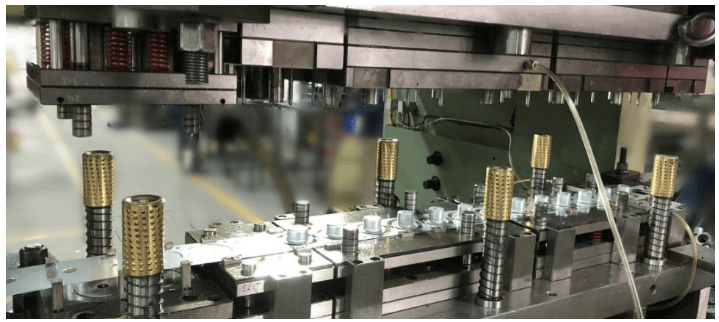
Punching Oil: The ‘Universal Lubricant’ of Metalworking
Punching oil plays a pivotal role in resolving various issues that arise during high-impact metal forming and in enhancing product quality. Much like using oil in a frying pan to prevent sticking, it reduces friction between the die and the metal sheet.
- Reducing Friction & Heat Generation: It mitigates the intense friction and heat generated when the die and metal materials come into contact under high pressure. Since excessive heat can deform the die and degrade product quality, punching oil serves as a crucial protector.
- Extending Die Life: Less friction means less wear and tear on the die. This significantly extends the lifespan of these expensive and precisely crafted tools, contributing greatly to cost reduction in manufacturing.
- Improving Formability & Ensuring Product Quality: It helps metal materials transform smoothly into the desired shape without tearing or wrinkling. This leads to fewer defects and ensures products meet design specifications with clean and precise edges.
Thanks to these benefits, punching oil enhances productivity, reduces defect rates, cuts manufacturing costs, and improves energy efficiency across metalworking processes.
However, punching oil isn’t without its challenges. Costs are incurred, waste oil disposal raises environmental concerns, and oil mist can affect the working environment. Moreover, any residual oil on the product can interfere with subsequent processes or final product performance. Thus, post-application drying and treatment are essential.
1. Pin Press Dies: Stamping the Heart of Precision Parts
Pin press dies are used to produce very small and complex metal components (such as parts within electronic devices, automotive components, and heat exchanger fins). Here, punching oil acts as a key enabler of high precision and intricate shapes. It controls even the finest friction, ensuring that each tiny part is manufactured with perfect accuracy. In this type of precision processing, clean application and post-treatment of the punching oil are crucial.
2. Motor Core: The Hidden Tech in the Heart of Electric Vehicles

As the world shifts toward electric vehicles, motors are becoming increasingly vital. A core component of these motors, the motor core, is made by precisely punching and stacking thin silicon steel sheets. Punching oil is used in this process as well.
However, motor cores operate in environments where electricity flows and heat is generated. Residual punching oil can compromise electrical insulation, reducing motor performance and shortening its lifespan. To address this, manufacturers emphasize complete removal of the oil—this is where the drying process becomes critically important.
After punching, the motor cores pass through oven-like dryers via conveyor belts, where they are exposed to high heat. This step ensures that all punching oil either evaporates or dries completely, allowing the motor core to deliver optimal electrical performance in a clean state.
3. Food Containers: Also Used in Forming Thin Aluminum Foil Sheets


Various food container products, such as aluminum foil lunch boxes and silver foil packaging containers, are also made through the press process.
The material commonly used for this is thin, wide aluminum foil sheets, and to prevent friction and cracking of the metal, lubricant (taba oil) is essential.
Products intended for food containers must meet strict hygiene and safety standards, so careful consideration is needed when selecting lubricants.
In light of these special requirements, taba oils should not only ensure good forming performance but also facilitate easy cleaning after the process and minimize residue.
Invisible Lubrication Driving Industry Forward
Punching oil is more than a simple metalworking aid. It’s a core technology that affects the performance of precision components and the overall lifespan of products. As new challenges emerge—like workplace safety, environmental regulations, and efficiency in cleaning processes—punching oils are evolving too.
Lubrication technologies will continue to advance. Innovations that reduce environmental impact and improve operational efficiency are being actively developed. In this push toward sustainable manufacturing, the unseen yet vital role of punching oil is gaining even more importance.
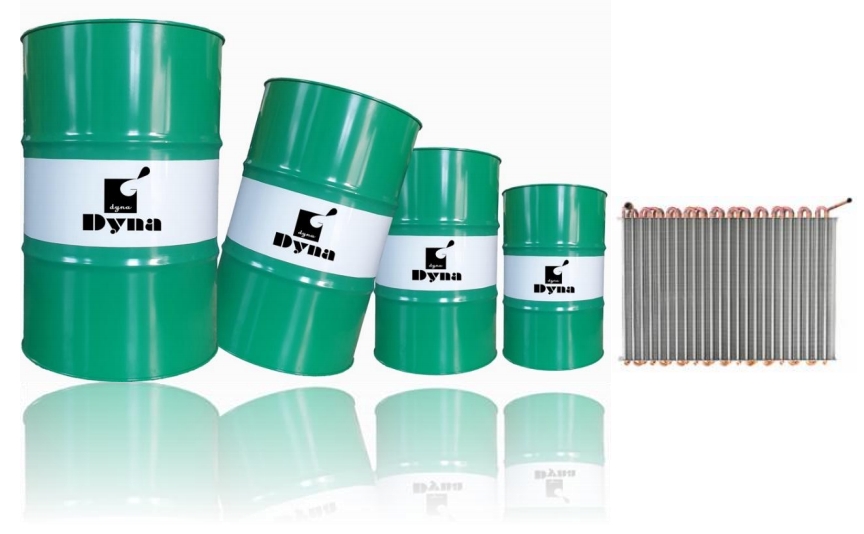
At Dyna, we are at the forefront of this transformation, developing and supplying a wide range of punching oils to clients around the world.
Our product lineup reflects the diverse needs of industries such as motor core and heat exchanger manufacturing, contributing to improved productivity and product quality.
We will continue to adapt to changing manufacturing environments and customer demands, delivering safe and efficient metalworking solutions into the future.

Dyna Co., Ltd.
Industrial Lubricant Solution
E-Mail : dyna@dynachem.co.kr
Web : dyna.co.kr/en/
 DYNA Co., Ltd
댓글 남기기