
What is Fine Blanking?
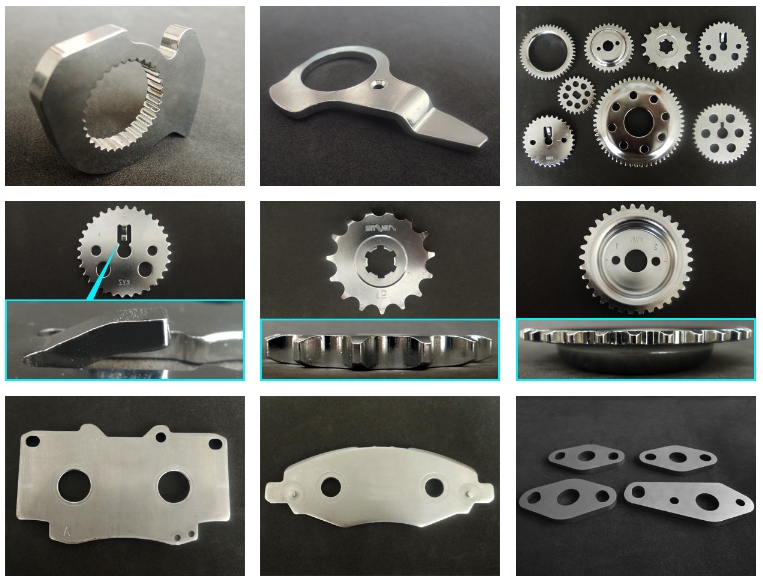
Fine blanking is a high-precision metal stamping process developed in Switzerland in the 1920s. The term itself means “precise blanking,” referring to the process of punching out parts with extremely smooth and accurate edges using plastic deformation under high compressive stress, a phenomenon known as the hydrostatic pressure effect. This effect enhances the ductility of the material, allowing for clean shearing.
Unlike traditional machining methods like turning, which create chips, fine blanking forms parts directly through pressing, making it ideal for mass production of complex components—particularly in the automotive industry. Though its working principle is similar to punching, blanking differs in that the cut-out portion is used as the product, whereas punching typically uses the remaining sheet.
Fine blanking stands out from general blanking when higher surface quality, precision, and dimensional consistency are required.
3 Key Advantages of Fine Blanking
1. Exceptionally Smooth Cut Surfaces
Fine blanking delivers clean, straight sheared edges across nearly 100% of the cut surface. In contrast, conventional blanking typically results in about one-third sheared surface and two-thirds fracture surface. The difference is similar to slicing a watermelon with a knife versus breaking it apart by hand—visibly and functionally significant.
The surface roughness from fine blanking ranges from Ra 0.4 to 1.6 μm, much smoother than conventional blanking or machining. Because of this, parts often require no secondary finishing, improving cost-efficiency.
2. Combined Forming Reduces Manufacturing Costs
Fine blanking isn’t limited to flat parts. It also enables simultaneous operations like bending, coining, and extrusion—features that add detail or functional shapes in one stroke. This capability shortens production steps, leading to significant cost savings.
3. Superior Quality Through Triple-Force Mechanism
While standard blanking relies solely on downward punch force, fine blanking uses three coordinated forces: clamping force (with a V-ring to fix the sheet), punch force, and counterforce from an ejector below. This triple-force setup yields higher accuracy, flatness, and perpendicularity.
The V-ring creates grooves that securely fix the sheet, minimizing movement and improving the sheared edge’s perpendicularity. The balanced top-down pressure also prevents material warping and deformation.
Equipment & Maintenance Considerations
Fine blanking setups require specialized, high-cost equipment including:
- Uncoilers to feed steel coils
- Levelers to flatten the material
- Roller feeders to control sheet advancement
Maintenance costs are approximately 10% higher than those for standard blanking systems due to the need for precise die assembly and disassembly.
Die life typically ranges from 500,000 to 1,000,000 strokes. Longevity depends on factors such as blanking depth accuracy, press rigidity, counterforce balance, material feed consistency, die setup precision, and heat treatment quality.
Material Selection
Fine blanking imposes stricter material requirements than conventional blanking. The shearing speed is slower—typically 5 to 15 mm/sec compared to 50 to 100 mm/sec for general blanking—allowing around 30–35 strokes per minute. Thicker or higher-tensile materials reduce the processing speed even further.
Materials must exhibit adequate ductility or malleability to prevent cracking and ensure clean shearing. Additionally, to achieve high-quality edges, cold-rolled sheets with spheroidized microstructures are preferred, adding about 5–10% to material costs.

Growing Applications and Hybrid Techniques
Fine blanking is increasingly used in combination with forging, sintering, casting, and machining to streamline manufacturing, reduce costs, and improve strength or weight performance.
Advancements in press capacity, die material, and surface treatments now enable fine blanking for larger parts and more challenging materials—broadening its application to industrial machinery and structural components.
Lubricant Selection for Fine Blanking
Since fine blanking includes elements of drawing, high-viscosity lubricants are essential. Without proper lubrication, cold welding and tool wear become severe, compromising surface quality and dimensional accuracy. The wrong lubricant can reduce tool life and degrade product quality.
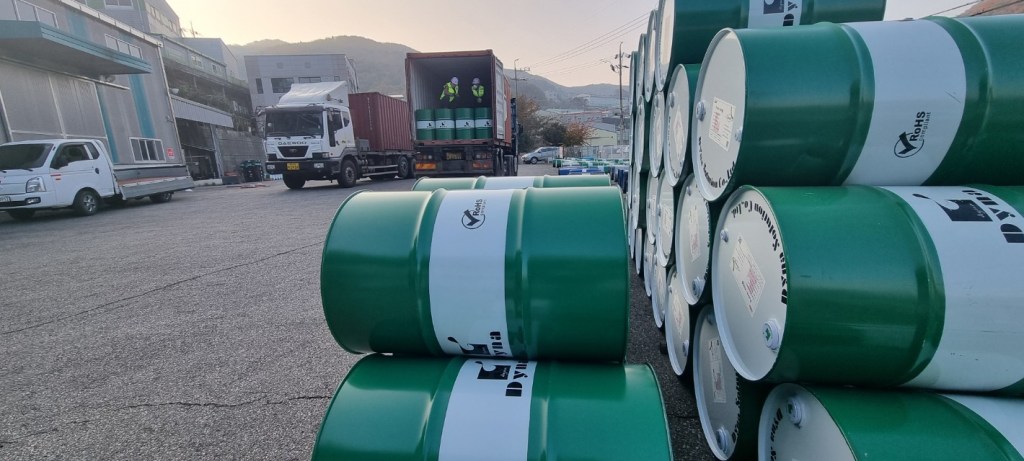
Always select lubricants based on material type and thickness. For further guidance, consult lubricant specialists Dyna Co., Ltd.

Dyna Co., Ltd.
Industrial Lubricant Solution
E-Mail : dyna@dynachem.co.kr
Web : dyna.co.kr/en/
 DYNA Co., Ltd
댓글 남기기