
Deep drawing is a core metal forming process used to produce cups, housings, deep cavities, and structural components. It is widely applied in the automotive, appliance, electronics, and semiconductor industries—but it is also one of the most challenging forming operations due to high friction, elevated heat, and heavy tool wear.
Because of this, choosing the right deep drawing lubricant becomes a critical factor in process stability and product quality.
This article highlights the essential lubricant properties required for deep drawing and explains why they are so important.

🔧 1. High Lubricity – The Foundation of Smooth Metal Flow
During deep drawing, the sheet metal strongly contacts the die surface while undergoing severe deformation.
This makes low friction performance absolutely essential.
If lubricity is insufficient, you may see:
- Surface scratches
- Non-uniform deformation
- Accelerated die wear
- Increased scrap due to surface defects
A stable and durable lubricant film allows the material to flow smoothly, enabling deeper drawing with consistent wall thickness.
🔥 2. Excellent Extreme Pressure (EP) Performance – Protecting the Die

Deep drawing operates under high loads and compression, so the lubricant must contain effective EP additives.
Without proper EP performance, the following issues can occur:
- Galling (material adhesion to the die surface)
- Bite marks
- Severe die scoring
- Premature die failure
EP additives create a protective chemical film under high-pressure conditions, preventing metal-to-metal contact.
🌡️ 3. Strong Thermal Stability – Preventing Breakdown at High Temperatures
The intense friction in deep drawing generates sharp temperature spikes.
If a lubricant lacks thermal stability, it can quickly degrade through oxidation, viscosity breakdown, or carbonization.
A thermally stable lubricant offers:
- Consistent lubrication film
- Lower risk of breakdown
- Reduced carbon residue
- Better part quality during long production runs
This is especially important when forming stainless steel or high-strength steel (HSS/AHSS).
🧪 4. Uniform Boundary Film – Maintaining Consistent Protection
A deep drawing lubricant must maintain a uniform boundary film even under heavy load and extended contact.
A stable boundary film ensures:
- Smooth metal flow
- Consistent deformation behavior
- Reduced scoring and scratches
This is particularly important for aluminum and stainless steel, which are prone to surface damage when film stability is weak.
🧼 5. Good Cleanability – Essential for Downstream Processes
After deep drawing, components often undergo welding, bonding, painting, or coating.
This makes residue control extremely important.
A cleanable lubricant offers:
- Fewer post-treatment defects
- Minimal carbon residue
- Higher surface cleanliness
- Better compatibility with welding or coating lines
Cleanability is especially critical in EV battery trays, housings, and precision electrical components.
🌫️ 6. Low Mist & Low Smoke – Operator-Friendly Performance
High-speed deep drawing can cause lubricants to vaporize or mist, creating safety and cleanliness issues.
Low-mist, low-smoke lubricants deliver:
- A safer working environment
- Less inhalation risk
- Reduced equipment contamination
- Fewer odor-related complaints
This is vital for automated or enclosed press lines.
🏭 7. Optimized Viscosity – Matching the Process and Material
Viscosity directly influences lubrication performance:
- High viscosity → stronger load resistance, good for severe deep drawing
- Low viscosity → excellent flow, cleaner surfaces, ideal for precision forming
Matching viscosity to die design, press speed, and material type ensures maximum stability and consistent product quality.
🏁 Conclusion: Deep Drawing Requires a Balance of Film Strength, EP, and Thermal Stability
Deep drawing is one of the most demanding metal forming processes.
To perform effectively, a specialized lubricant must offer:
- High lubricity
- Strong EP performance
- Excellent thermal stability
- Durable boundary film
- Good cleanability
- Low mist/low smoke
- Proper viscosity control
Meeting these requirements increases die life, improves surface quality, minimizes scrap, and enhances overall productivity.
⭐ Dyna’s Product Integration
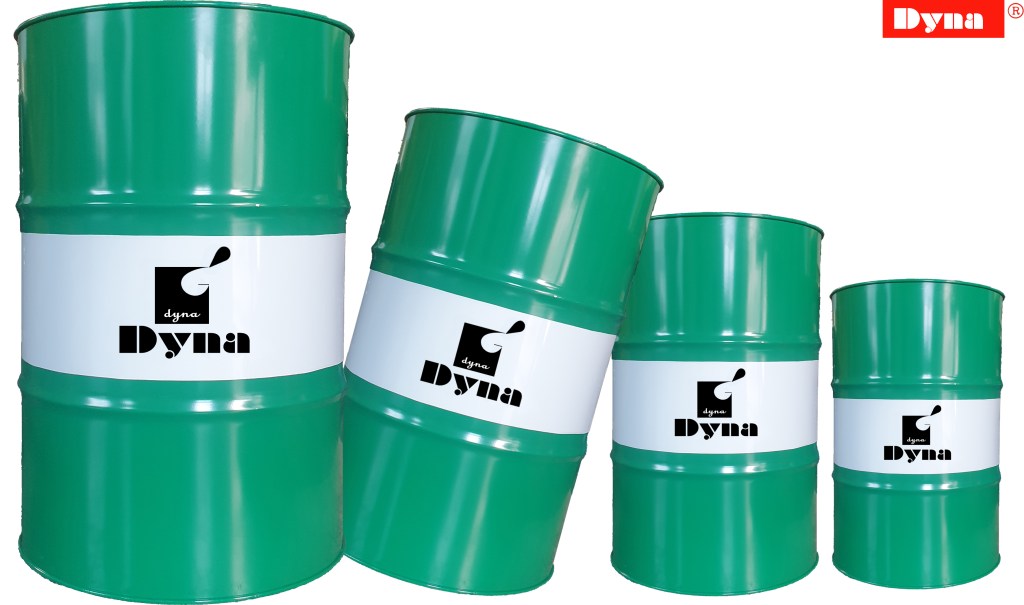
Dyna’s drowing oil designed for aluminum forming—delivers:
- Strong lubricity
- Stable thermal and boundary film performance
- Excellent cleanability
- Low mist / low smoke characteristics
Customized formulations (viscosity, EP package, film strength) can also be developed for specific customer applications.
Dyna Co., Ltd.
Industrial Lubricant Solution
E-Mail : dyna@dynachem.co.kr
Web : dyna.co.kr/en/
 DYNA Co., Ltd
댓글 남기기