
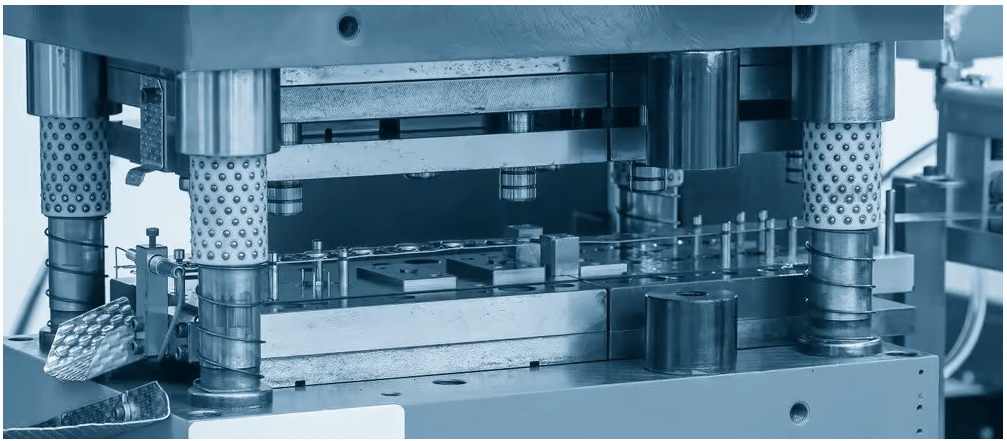
Maximizing Tool Life, Surface Quality, and Productivity in Sheet Metal Fabrication
In modern sheet-metal manufacturing, punching and blanking operations are under constant pressure: higher speeds, tighter tolerances, stronger materials, and reduced downtime. As these demands increase, one factor becomes more mission-critical than ever—proper lubrication. The right punching oil does far more than simply “reduce friction.” It directly impacts tool longevity, product quality, equipment stability, and overall operating cost.
This article explains why lubrication matters, the mechanisms behind its performance, and what manufacturers should consider when selecting a high-performance lubricant for punching and blanking.
1. Lubrication Prevents Galling and Adhesion Wear Stamping involves extreme localized pressure where the punch contacts the workpiece. Without robust lubrication:
Aluminum and stainless steel easily adhere to Stamping surfaces
- Galling accelerates tool wear
- Burr height increases and quality becomes inconsistent
- Unexpected punch breakage can occur
A well-formulated punching oil forms a protective boundary film that prevents metal-to-metal contact. This barrier reduces adhesion, stabilizes cutting forces, and enables smoother scrap evacuation.
High-lubricity products—such as chlorinated EP systems or advanced non-chlorinated additives—show particularly strong performance when processing aluminum or high-strength steel.
2. Improved Tool Life and Lower Operating Costs

Tooling costs are one of the largest contributors to punching-operation expenses.
The right lubricant dramatically extends tool life by:
- Minimizing frictional heat
- Preventing micro-cracks and fatigue damage
- Reducing sharpening frequency
- Maintaining dimensional accuracy over long runs
Plants often report 20–40% longer tool life simply by switching to a more suitable punching lubricant. This translates into lower tool-replacement costs and significantly reduced downtime.
3. Enhanced Surface Quality and Dimensional Accuracy
A stable lubrication film ensures that the punch penetrates the sheet cleanly.
Benefits include:
- Lower burr height
- Reduced die roll and break deformation
- Cleaner edges for downstream bending or welding
- Lower scrap rate
For automotive, electronics, and appliance parts—where edge quality is critical—lubrication plays a decisive role in meeting customer tolerances.
4. Managing Heat in High-Speed and High-Strength Applications
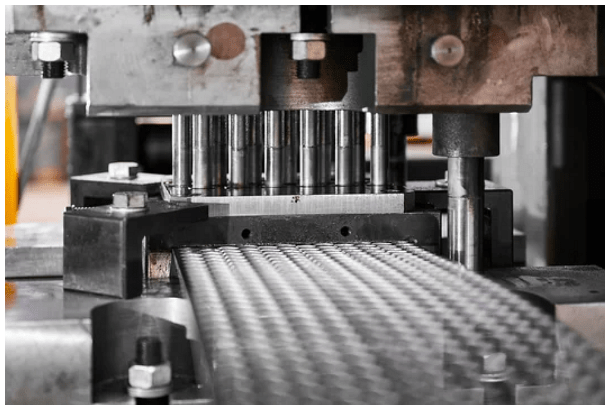
When punching high-strength steel or operating at high strokes per minute, heat rapidly accumulates. Excessive heat causes:
- Thermal expansion of tooling
- Loss of dimensional control
- Damage to coatings such as TiN/TiCN
- Work-hardening of sheet materials
Punching oils with excellent cooling and wetting properties dissipate heat quickly, keeping both tools and parts stable under demanding conditions.
5. Cleaner Operation and Reduced Maintenance
Modern punching oils are engineered to provide:
- Low misting during high-speed press operations
- Fast spreading and wetting
- Easy cleanup after stamping
- Compatibility with washing lines or water-based cleaners
This leads to a cleaner workplace, reduced fire hazard, and lower maintenance on presses, sensors, and scrap conveyors.
6. Environmental and Safety Benefits
Regulations and customer requirements are increasingly pushing the industry toward:
- Chlorine-free solutions
- Low-VOC formulations
- Skin-friendly and odor-controlled products
- Non-staining oils for aluminum and galvanized steels
Advanced synthetic lubricants and ester-based formulations meet these requirements while still delivering superior performance.
7. Selecting the Right Lubricant for Punching & Blanking
Choosing a lubricant should be based on:
| Consideration | Why It Matters |
|---|---|
| Material type (Al, SS, HSS, GI, copper) | Adhesion and friction behavior differ |
| Thickness & tensile strength | Determines required EP performance |
| Stroke rate & tonnage | Impacts heat and viscosity selection |
| Tool coating (TDC, TiN, DLC) | Some coatings prefer specific lubricants |
| Post-process cleaning conditions | Solubility and washability |
| Environmental regulations | VOC, chlorine-free requirements |
Manufacturers producing aluminum components—such as automotive brackets, EV battery parts, or appliance trim—benefit especially from lubricants designed to prevent aluminum welding on punches, such as high-performance synthetic oils like Dyna Punch-4300S
Lubrication is not merely a supporting factor in punching and blanking operations—it is a critical determinant of productivity and quality. The right lubricant reduces galling, extends tool life, stabilizes edge quality, prevents overheating, and keeps operations clean and safe.
In an era of stronger materials, faster production lines, and increasingly tight tolerances, choosing the right punching oil is no longer optional—it is a strategic decision that directly affects competitiveness.

Dyna Co., Ltd.
Industrial Lubricant Solution
E-Mail : dyna@dynachem.co.kr
Web : dyna.co.kr/en/
 DYNA Co., Ltd
댓글 남기기