
In metal stamping environments, productivity, die life, and part quality all depend heavily on one often-overlooked factor: proper lubrication. Whether you’re punching aluminum, stainless steel, copper, or coated steels, the right lubricant can dramatically reduce defects, prevent tool damage, and stabilize your entire production process.
This article explains why lubrication is essential in punching and blanking operations—and what manufacturers stand to gain by choosing the right formulation.
1. Understanding Punching Operations
Punching and blanking are high-speed metal forming processes where a punch tool exerts force on sheet metal to create a hole (punching) or separate a part from the sheet (blanking).
These operations generate:
- Extremely high contact pressure
- Friction and heat
- Metal-to-metal interface between punch, die, and workpiece
Without adequate lubrication, these conditions quickly lead to premature wear and inconsistent part quality.
2. The Role of Lubrication in Metal Stamping

Proper lubrication isn’t simply “oil on metal.” It delivers several critical functions during stamping:
① Reducing Friction
Lubricants form a thin protective film between the punch and metal surface, preventing direct contact. Lower friction translates into:
- Lower punch force
- Reduced heat generation
- Smoother tool operation
- Improved dimensional accuracy
② Preventing Galling and Welding
Galling—especially common with aluminum—is the result of micro-welding between tool and workpiece.
High-performance lubricants prevent this by:
- Creating a stable boundary film
- Dissipating heat
- Reducing adhesive tendencies
This is one of the main reasons why dedicated aluminum punching oils like Dyna-4300S are preferred.
③ Extending Die Life
Die sharpening, replacement, and downtime cost far more than lubricant does.
Proper lubrication:
- Minimizes wear on cutting edges
- Prevents micro-chipping
- Reduces die maintenance frequency
- Extends tool life significantly
④ Reducing Burrs and Edge Defects
A well-lubricated interface ensures:
- Cleaner shearing action
- Reduced burr height
- More consistent part edges
- Lower scrap rate
Insufficient lubrication is one of the top causes of burr-related rework.
⑤ Improving Heat Control
Even small rises in heat alter material behavior.
Lubricants help:
- Absorb and disperse heat
- Prevent thermal expansion
- Maintain stable dimensional tolerances
3. The Cost of Poor Lubrication
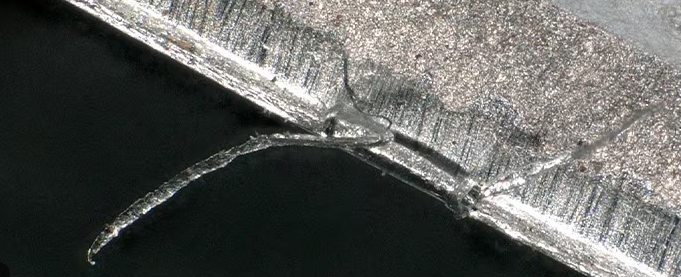
A stamping line with inadequate or improper lubrication will experience problems such as:
- Galling/welding on punches
- Excessive burr formation
- Faster die wear
- Surface scratches or scoring
- Increased reject rate
- Higher energy consumption
- Unplanned downtime
In many cases, simply switching to a properly engineered punching oil solves these issues without modifying equipment or process parameters.
4. Benefits of Using Specialized Punching Oils
Specialized formulations such as Dyna-4300S, designed for aluminum punching, offer advantages over generic lubricants:
✔ Superior lubricity at low film thickness
Minimizes residue while providing strong protection.
✔ Excellent anti-wear and anti-weld additives
Crucial for preventing tool sticking on soft metals like aluminum.
✔ Fast evaporation / easy cleaning
Ideal for no-wash or semi-wash processes.
✔ Improved part appearance
No stains, no dark residues, no oil pooling.
✔ Lower consumption
Engineered to work effectively with minimal application volume.
5. Lubrication as a Value Generator, Not a Cost
Many manufacturers make the mistake of treating lubricant as a cost to be minimized.
In reality, lubrication is one of the highest-leverage improvements in a stamping line.
A high-quality punching oil can:
- Increase die life by 20–40%
- Reduce burr defects by up to 60%
- Improve line speed
- Reduce cleaning and post-processing costs
- Lower overall production cost per part
The value created far exceeds the cost of the lubricant itself.
Conclusion
Lubrication plays a central role in the performance, quality, and economy of punching and blanking operations.
From reducing friction to preventing galling, from improving part finish to protecting expensive tooling, the right punching oil is one of the most important factors for stable, efficient stamping.
Companies that invest in specialized lubricants—such as Dyna-4300S, optimized for aluminum punching—see fewer defects, longer tool life, and more productive press lines.

Dyna Co., Ltd.
Industrial Lubricant Solution
E-Mail : dyna@dynachem.co.kr
Web : dyna.co.kr/en/
 DYNA Co., Ltd
댓글 남기기