
Along with the rapid growth of the electric vehicle (EV) and energy storage system (ESS) markets, secondary battery manufacturing processes are becoming more sophisticated by the day. Just as important as the chemical technologies that increase battery capacity and charging speeds is the “precision machining technology” that guarantees yield and safety. Among these processes, punching oil (also known as stamping fluid), which is essential for forming battery casings and core components, is the hidden protagonist that determines the final perfection of the battery. In today’s blog, we will take a closer look at the core role of punching oil in the secondary battery manufacturing process and the criteria for selecting the right product.
1. The Secondary Battery Process: Why is “Special” Punching Oil Needed?
Unlike general industrial press machining, secondary battery (especially lithium-ion battery) manufacturing lines are extremely sensitive to foreign substances and moisture. While effectively controlling the heat and friction generated when cutting and forming metals, the punching oil must not adversely affect the chemical reactions inside the battery.
2. Three Core Conditions of Punching Oil for Next-Generation Batteries
For flawless battery production, punching oil must pass the following strict criteria:
- ① Perfect Volatility and Ultra-Low Residue This is the most crucial factor. If oil remains on the metal surface after machining, an additional cleaning process is required, which lengthens lead times. Furthermore, residue can react with the electrolyte, causing fires or performance degradation. Recently, fast-drying (volatile) punching oils that do not require a separate degreasing process have become the industry standard.
- ② Excellent Cooling and Extreme Pressure (EP) Properties As battery components become smaller and thinner, the stress applied to the press die increases significantly. Oils containing excellent extreme pressure additives quickly control the high heat generated during machining and extend the lifespan of the die, thereby reducing downtime in continuous production lines.
- ③ Prevention of Discoloration and Corrosion in Non-Ferrous Metals Due to the nature of secondary batteries, which primarily utilize non-ferrous metals like aluminum and copper, a special anti-rust design must be applied to the oil to prevent oxidation and discoloration.
3. Key Processes Using Punching Oil in the Battery Industry
1) Precision Punching of Lead Tabs
Lead tabs are thin metal terminals made of aluminum and copper that connect the electricity from the cathode and anode to the outside.
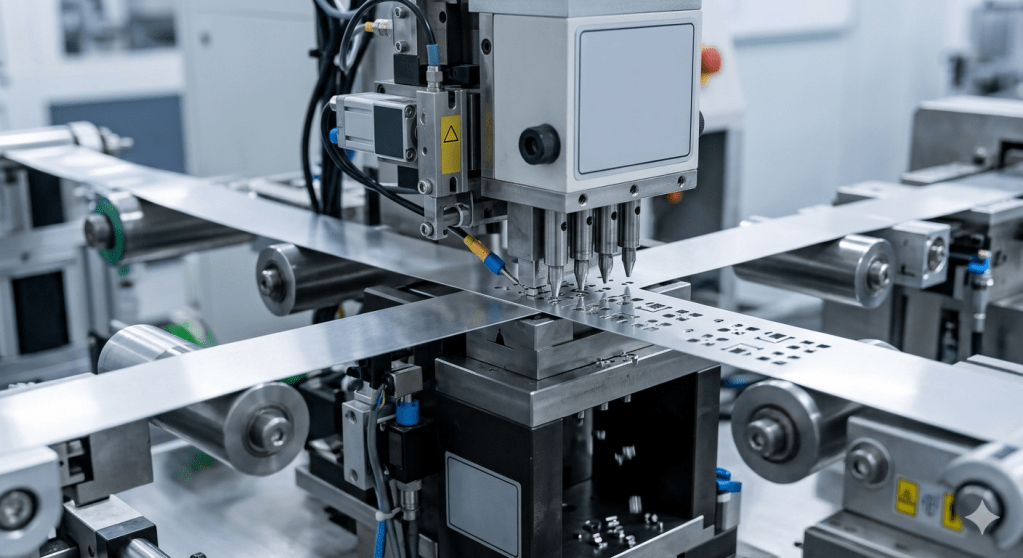
Role of Punching Oil: It prevents thin metal plates from sticking to the die (stick-slip phenomenon) during ultra-high-speed continuous press operations. Its most critical role is to smoothly treat the punched cut surface to suppress the generation of burrs (microscopic protrusions), thereby fundamentally eliminating the risk of internal short circuits caused by damage to the battery separator.
2) Machining of Busbars and Module Connection Components
A busbar is a core component that integrates and distributes power by connecting dozens to hundreds of battery cells together. They are primarily manufactured by punching and bending flat plates of copper (Cu) or aluminum (Al).
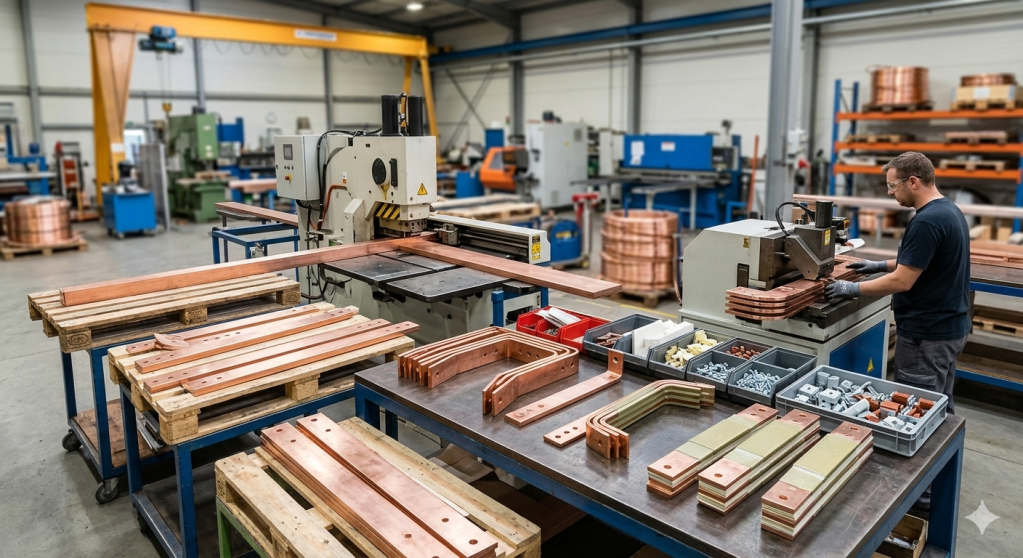
Role of Punching Oil: It controls the immense frictional heat generated when punching copper or aluminum at high speeds. Since burrs or scratches on the cut surface can directly lead to power loss and fire hazards, high-performance punching oil is essential to provide excellent extreme pressure properties and improve the surface roughness of the cut.
3) CID (Current Interrupt Device) and Safety Vents
These are the ultimate safety mechanisms that prevent explosions by venting gas or physically interrupting the current when the internal pressure of cylindrical and prismatic batteries rises to dangerous levels.
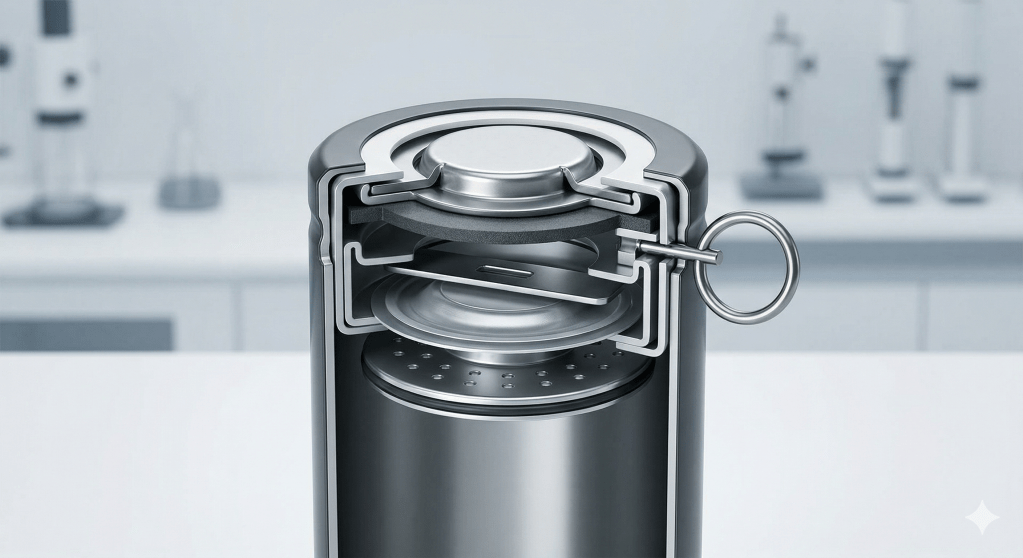
Role of Punching Oil: These components require engraving fine fracture lines (V-Notches) or performing ultra-precision punching on thin metals. Because dimensional tolerances must be controlled at the micrometer (㎛) level, ultra-low residue, high-precision lubricants that leave no debris on the die are absolutely required.
High-Precision Punching Solutions Proposed by Dyna Solution
In an era where the performance of secondary batteries is being standardized at a higher level, the core of competitiveness now lies in the integrity of the manufacturing process. A single, invisible thin lubricating film withstands tens of thousands of press cycles and ensures the safety of the battery. At Dyna, having accumulated extensive know-how in the field of precision punching, we are dedicating ourselves to researching next-generation lubrication solutions optimized for secondary battery machining. In the highly advanced secondary battery ecosystem, we will propose the optimal solutions to elevate your process efficiency and product reliability to the next level.
Dyna Solution Co., Ltd.
Industrial Lubricant Solution
E-Mail : dyna@dynachem.co.kr
Web : dyna.co.kr/en/

 DYNA Co., Ltd
댓글 남기기