
There is a concern that anyone working in a metalworking site, especially one using water-soluble cutting fluids, has likely experienced at least once: the pungent stench that fills the factory on Monday mornings. This odor is more than just an unpleasantness; it is a clear warning sign that the cutting fluid has ‘rotted.’ If left unchecked, it leads to fatal consequences, including reduced factory yields and threats to workers’ health.
Today, on the Dyna Solution technical blog, we will explain in an easy-to-understand manner the scientific causes of water-soluble cutting fluid spoilage and the warning signs that allow for rapid detection, all for the benefit of field practitioners.
Why Does Spoilage Occur? – The Bacterial Attack
Water-soluble cutting fluids, created by mixing water and oil, are the ideal ‘breeding ground’ for microorganisms. The fundamental cause of spoilage is the proliferation of microorganisms (bacteria and fungi).

What is happening inside the cutting fluid tank?
Water is Life
Water makes up more than 90% of water-soluble cutting fluid. Water provides an essential environment for bacteria to thrive.
Abundant ‘Food’ Supply
Cutting fluid tanks are overflowing with excellent food sources for bacteria, such as chips (metal shavings) generated during the machining process, oil mixed in from the outside (external oil), and worker sweat or dust. In particular, the contamination of ‘external oil’ is the largest food source for putrefactive bacteria.
Optimal Temperature and Oxygen
The hot factory temperatures during the summer maximize bacterial activity. Additionally, while oxygen is continuously supplied via pumps during machining, the supply is cut off on weekends when the machines stop, causing ‘anaerobic bacteria’ to begin multiplying rapidly.
These anaerobic bacteria consume chips and external oil while emitting hydrogen sulfide gas, which is the cause of the rotten egg smell emanating from the factory on Monday mornings.
How Do You Know About Corruption? – 3 Warning Signs Sent by Cutting Fluid
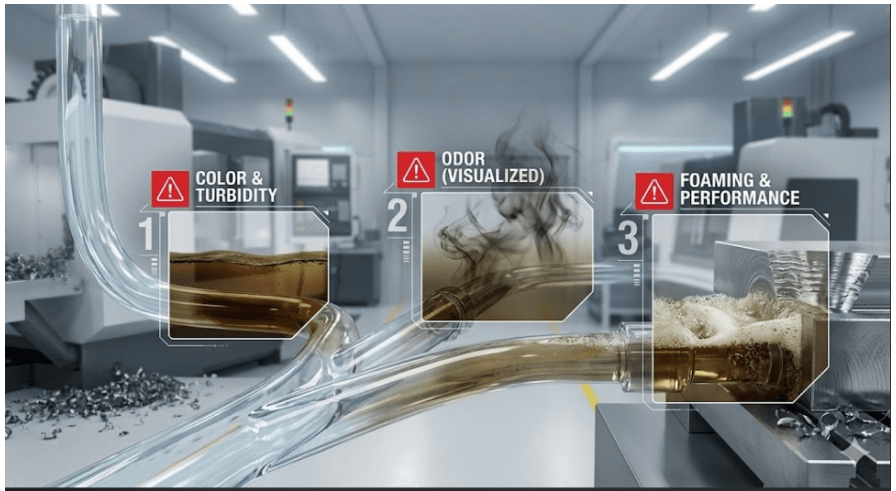
Even before cutting fluid has completely spoiled and emits a foul odor, the fluid constantly sends us danger signals. Quickly detecting and addressing these signals is key to saving costs.
Signal 1: The Most Certain Warning – Odor
This is the most intuitive signal. If you arrive at work on Monday morning and notice a rotten egg smell, gas, or sour odor around the tank, spoilage is already quite advanced. It often starts with a faint sour smell, so you must pay attention if you notice any unusual odors.
Signal 2: An Unmistakable Indicator – pH Fluctuations
Cutting fluid is typically healthiest when it maintains a slightly alkaline pH of around 8.5 to 9.5. However, as bacteria multiply, they release acidic substances, which lowers the pH.
If pH drops below 8.0: Spoilage is already actively in progress, a critical condition that causes corrosion in molds and equipment. You can detect spoilage early simply by checking daily with a simple pH test strip.
Signal 3: Visible Changes – Color, Foam, Emulsion Separation
If the color of your cutting fluid, which was once clear, turns cloudy to a dull gray or black, or if you suddenly notice more foam than usual, you should suspect bacterial waste or chemical deterioration of the emulsion. Additionally, the separation of oil and water, which floats black on the top of the tank, is also a result of spoilage.
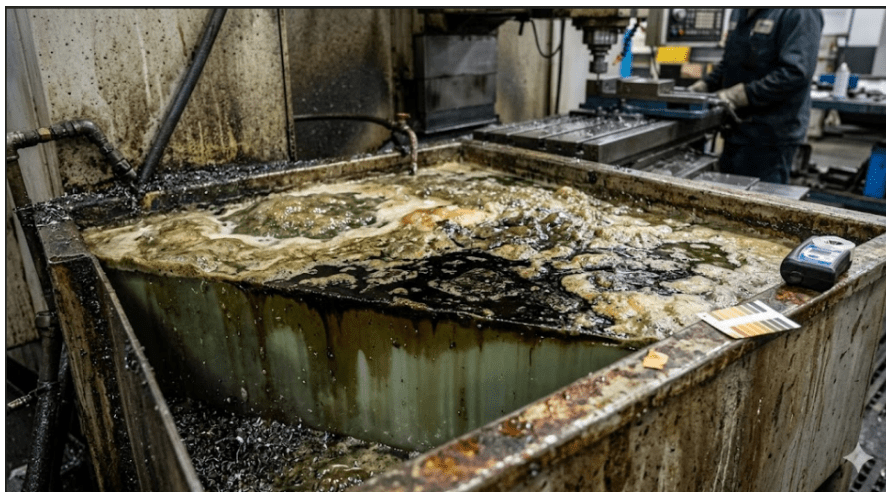
Spoilage Management is the First Step in Factory Management
Spoilage of water-soluble cutting fluids is not merely a matter of foul odors. Spoiled fluids reduce cutting performance, shortening mold lifespan and inflicting massive “hidden costs” on the factory, including increased costs (TCO) due to frequent fluid replacements and the development of dermatitis and respiratory diseases among workers.
If you are struggling to improve yields due to frequent odor and spoilage issues, please explore Dyna Solution’s accumulated field data and consulting to find an optimized low-spoilage cutting fluid solution tailored specifically to your company.
Dyna Solution Co., Ltd.
Industrial Lubricant Solution
E-Mail : dyna@dynachem.co.kr
Web : dyna.co.kr/en/


답글 남기기