
Hello! If you deal with Electrical Discharge Machining (EDM) in the precision machining field, you already know that your choice of “dielectric fluid” impacts the machining results just as much as the quality of your equipment or electrodes.
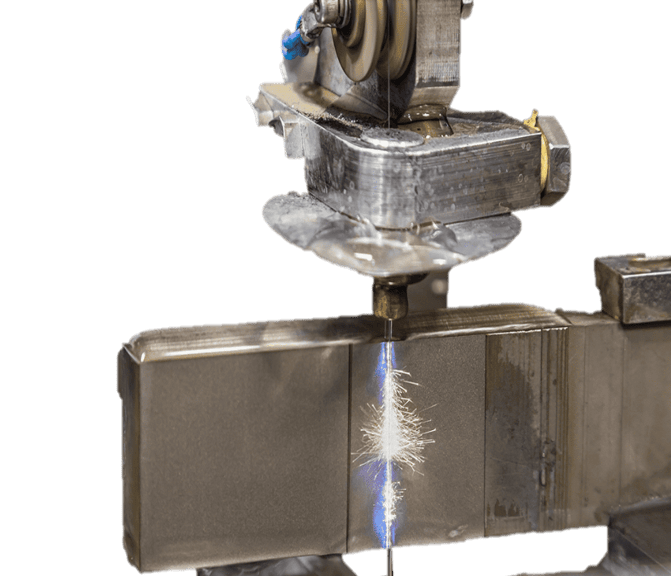
If you think of it merely as a coolant and use just any oil, you may experience slower machining speeds, poor surface finishes, and even fire hazards. Today, we will break down the essential criteria you must check when selecting an EDM fluid for successful operations.
1. What Exactly Does EDM Fluid Do?
Before diving into the selection criteria, it is crucial to understand exactly what EDM fluid does on the shop floor.
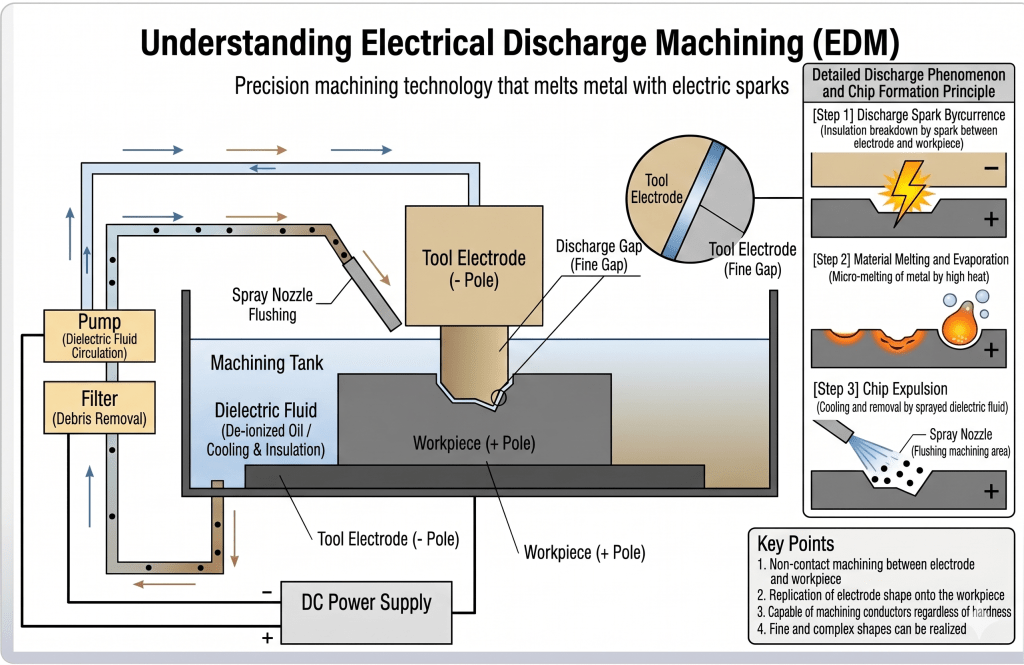
- Insulation and Discharge Induction: It typically acts as an insulator, preventing electricity from flowing. Only when the distance between the electrode and the workpiece becomes extremely close does it momentarily break down the insulation to create a spark (discharge).
- Powerful Cooling Effect: When discharge energy reaching thousands of degrees is generated, it rapidly absorbs the surrounding heat, preventing thermal deformation of the electrode and the workpiece.
- Chip (Sludge) Flushing: It washes away the fine metal debris melted by the discharge from the machining area, preventing secondary discharges or short circuits.
2. The 4 Essential Checklists for Selecting EDM Fluid
So, how should you choose the perfect EDM fluid for your site? Carefully compare the following four specifications:
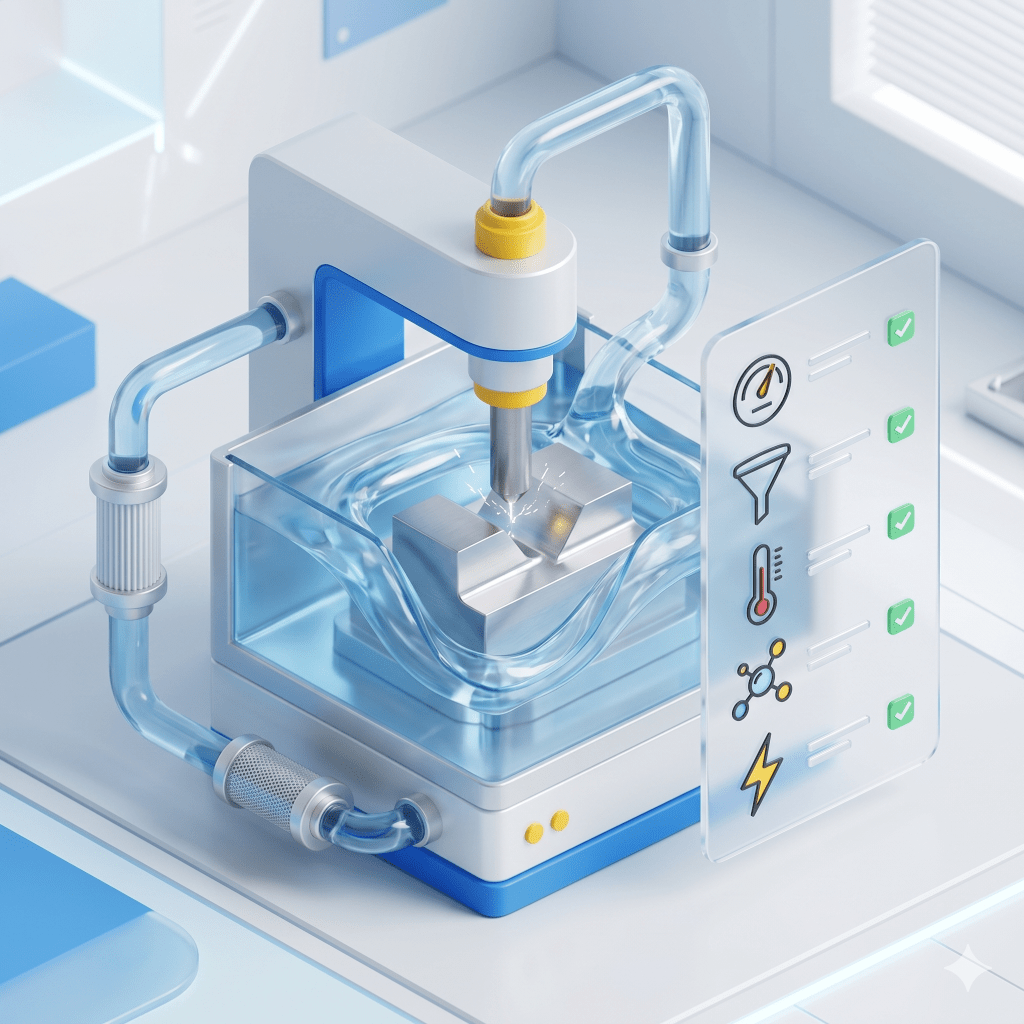
1) Viscosity: The Core Factor Determining Machining Characteristics Viscosity refers to the thickness or stickiness of the oil. You must choose the appropriate viscosity based on your machining purpose.
- Low Viscosity: Advantageous for machining narrow gaps or complex shapes. Its excellent fluidity quickly flushes out fine chips, making it suitable for finishing operations or micro-hole machining.
- High Viscosity: Advantageous for roughing operations with high discharge energy. It excels at lifting and flushing out larger chips and is economical due to its lower evaporation rate.
2) Flash Point: Directly Linked to Workplace Safety The flash point is the lowest temperature at which the oil vapor will ignite when exposed to a spark.
- Since EDM inherently involves generating sparks, choosing a product with a high flash point significantly reduces the risk of fire. (The recent trend is to use high-flash-point EDM fluids of at least 70°C, and preferably over 100°C for optimal safety.)
3) Oxidation Stability: Reducing Maintenance Costs When machining fluid is continuously exposed to high-temperature discharge heat and oxygen, it gradually oxidizes and forms sludge.
- Products with excellent oxidation stability degrade less over extended use, allowing for longer oil change intervals.
- It reduces filter clogging, significantly decreasing maintenance costs and operator fatigue.
4) Work Environment (Odor and Skin Irritation) Since operators must work closely with it all day, human-friendliness is extremely important.
- Low/No Odor: Choose a product with low Volatile Organic Compound (VOC) emissions to avoid headache-inducing smells.
- Minimized Skin Irritation: Highly refined oils free from impurities and aromatic compounds should be used to prevent operator skin issues like dermatitis.
3. Mineral Oil vs. Synthetic Oil: Which Should You Use?
- Mineral Oil: A traditional machining fluid made by refining crude oil. It is inexpensive and widely used for general-purpose machining, but it tends to have a shorter lifespan and can be more susceptible to oxidation compared to synthetic oils.
- Synthetic Oil: A premium machining fluid chemically synthesized to gather only the properties optimized for EDM. While more expensive upfront, it boasts a very long lifespan, exceptional machining precision, and significantly improves the work environment, making it highly cost-effective from a long-term perspective.
Summary and Conclusion
Selecting the right EDM fluid ultimately depends on whether your factory’s main focus is roughing or finishing, and how much you prioritize safety and the work environment.
Rather than simply looking for the oil with the lowest price per liter, we hope you choose the optimal EDM fluid by considering the overall benefits: improved machining precision, extended filter life, and operator health protection.
We hope this guide helps elevate the machining quality on your shop floor to the next level! If you have any further questions about specific brands or product lines, please feel free to ask anytime.
Dyna Solution Co., Ltd.
Industrial Lubricant Solution
E-Mail : dyna@dynachem.co.kr
Web : dyna.co.kr/en/


답글 남기기